See how it's built

Foundation

Post Columns

Girts

Trusses

Purlins

Insulation

Window & Door Framing

Post Frame Foundations
Post Frame Embedded Posts Foundation
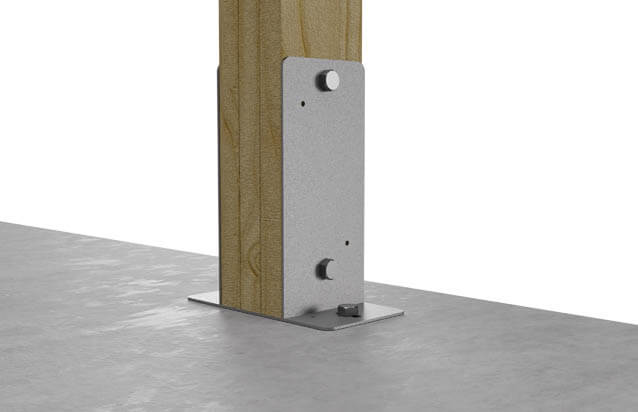
Post Frame Secure to Concrete Foundation

Foundation

Post Frame buildings are unique in the fact that a concrete foundation does not need to be poured prior to construction. This saves you on time and expense of purchasing concrete and waiting for the concrete to cure properly. This also allows for buildings to be constructed at times of the year when pouring concrete can be more difficult.

Embedded Posts

Secured to Concrete

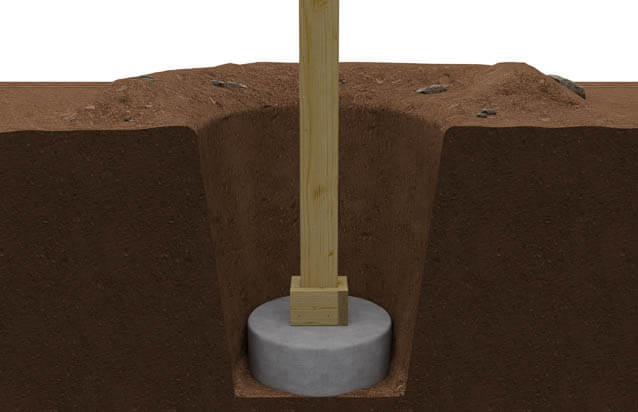
By Embedding the posts in ground on top of a concrete footing pad, the posts are using the soil to help provide resistance from wind loads on the walls. Another benefit is faster construction times. By embedding posts in ground, you do not need to wait for a concrete foundation to cure before starting construction. Also, embedding posts in ground on top of a pre-cast concrete footing pad, saves you from the expense of a poured concrete foundation. If you choose, a concrete floor can be added after the construction of the building is completed.

For those who prefer to install the posts on top of grade and not embed them in ground, we use anchor brackets to firmly attach the posts to a concrete foundation. Anchor brackets are available in both a wet set option that is installed at the time the concrete is poured, or a dry set option that are installed after the concrete is poured and properly cured.
Post Frame Post
Post Frame Anchor Block
Post Frame Treated post
Post Frame Laminated Column

Post/Columns

Post frame buildings get their strength from larger framing members. The vertical supports — your posts or columns — are the backbone of the structure. All posts are treated to ground-contact standards to stand up to moisture and soil over time.

Anchor Blocks

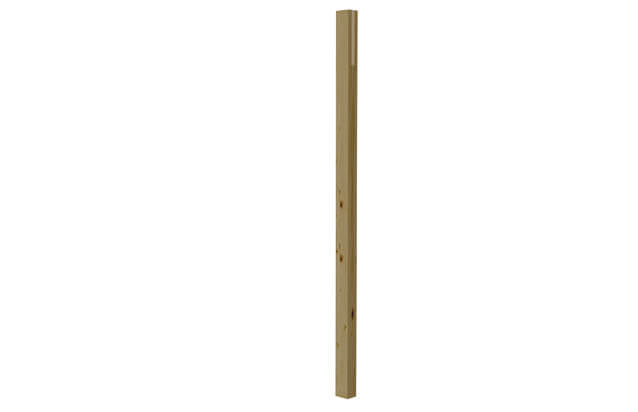
Treated Posts

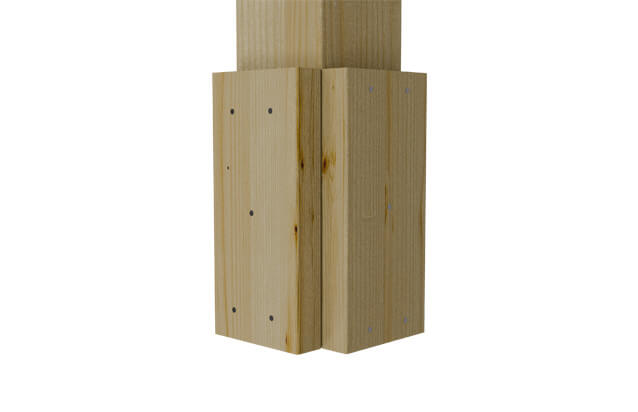
Laminated Columns

Anchor Blocks are 12" treated blocks that are attached to the bottom faces of all embedded posts/ columns. These anchor blocks provide uplift protection to your building keeping your building firmly secured to the ground.

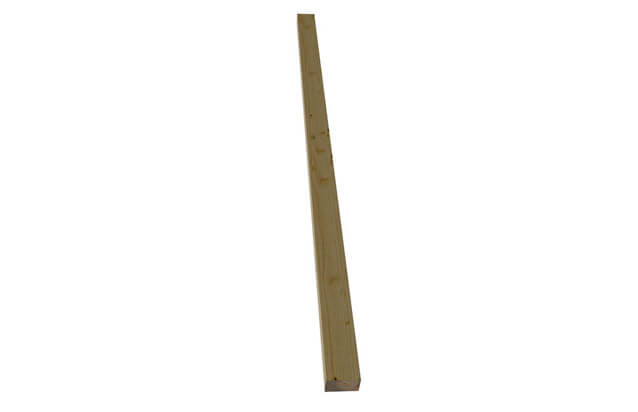
Smaller buildings with shorter walls usually use solid treated posts. For wall heights up to about 10 feet, 4x6 posts are common. For walls up to around 14 feet, 6x6 treated posts are typically used.

For taller buildings (16 feet and higher), larger framing members are needed. Solid posts of that size aren't practical, so laminated columns are used instead. These are built from multiple plies of lumber — often 2x6, 2x8, or 2x10 — secured together to create a stronger column. The number of plies depends on your building's size and design needs.

Post Frame Post
Post Frame Bookshelf
Post Frame Double
Post Frame Flat

Girts

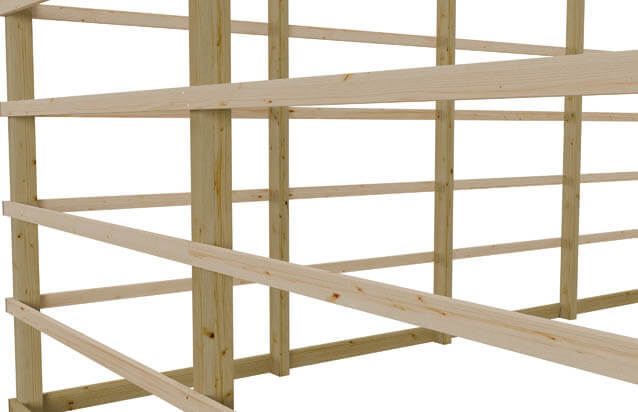
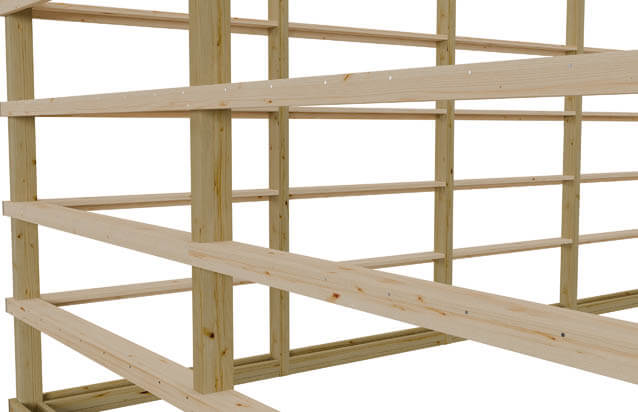
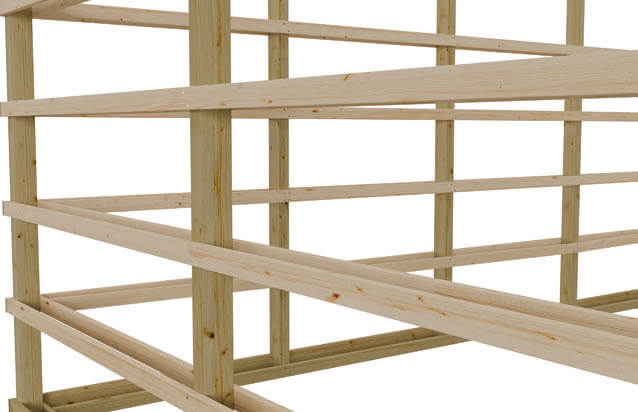
Girts are your lateral wall framing that allow your wall steel to be firmly attached to the building. Depending on options such as type of wall sheathing, insulation or even wall height, there are a number of different styles of girts that could be used on your building.

Bookshelf

Double Girt

Flat Girt

This style of girt is often times used when the owner is planning to finish off the interior and insulate the building using R-19 wall insulation. We design bookshelf buildings with a flat exterior girt on the posts and additional 2x6 "bookshelf" girts installed between the posts. Most commonly spaced at 24" OC, bookshelf girts allow the wall cavity to be filled with R-19 wall insulation and can be installed after the exterior shell of the building is completed.

This style of girts consists of both Exterior flat girts and interior flat girts. This style is more common on taller walled buildings utilizing columns that have a wall cavity depth greater than 6". The size and spacing of both the interior and exterior girt can vary depending on building size and loadings.

These are traditionally 2x4 or 2x6 material that are nailed to the exterior faces of your wall posts. The spacing on these girts can range from 24" to 36" depending on the building use and by local building requirements. Wall girts provide a wider nailing surface to attach your wall steel.

Post Frame Trusses
Post Frame Truss
Post Frame 4 Foot On Center
Post Frame 2 Foot On Center

Trusses

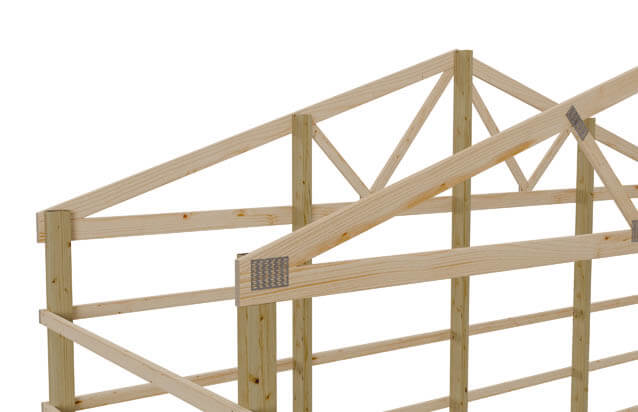
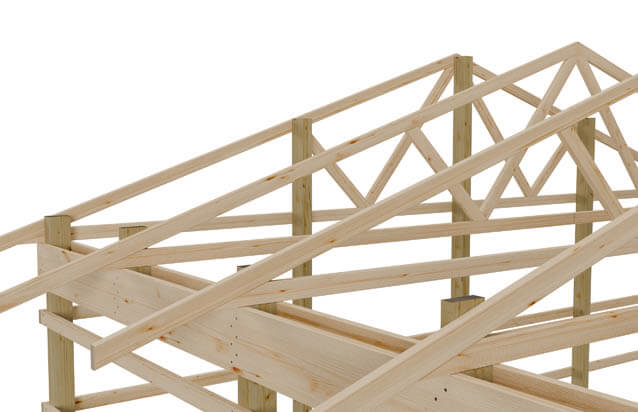
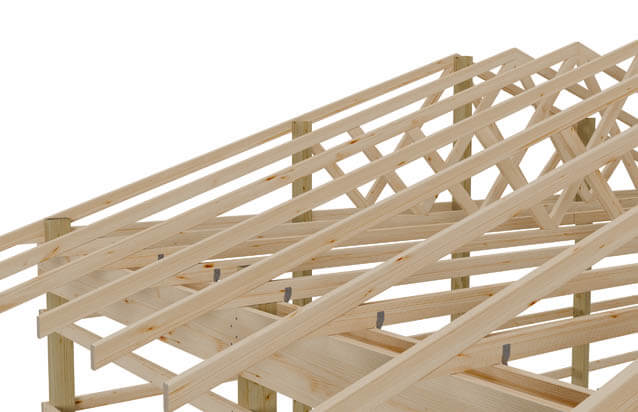
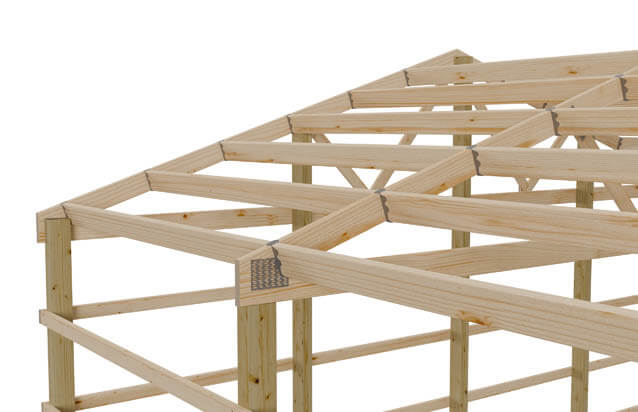
Trusses are the main framing component that supports the roofing materials as well as any additional loads (snow) that are added to the roof. Trusses are designed to support the weight and transfer that weight to the walls and the posts within those walls. Depending on the region and builder preferences, there are a number of spacing options for trusses on buildings.

Truss to Pole

4' OC

2' OC

Commonly used with truss spacings of 6' On Center or greater, this type of post frame truss is notched into the wall posts and transfers the roof loads directly to the posts.

This style of post frame utilizes trusses spaced at 4' OC with posts spaced at 8' OC. This requires a continuous sidewall header (truss Carrier) to be installed on the eave walls to support every other truss not landing on a post and the header will transfer the roof load to the posts. A main benefit to this is the purlins are laid flat from truss to truss making a wider nailing surface to attach your roof steel.

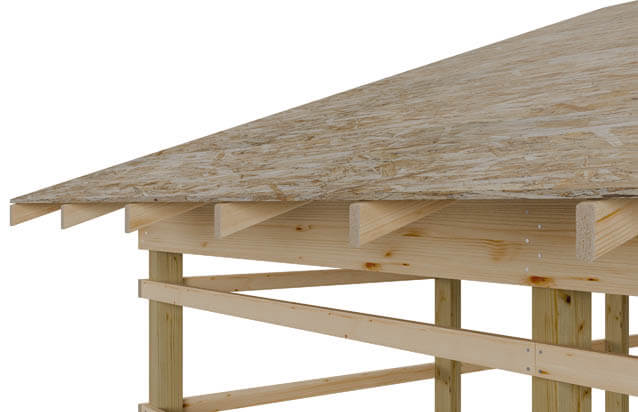
This style of post frame utilizes trusses spaced at 2' OC while maintaining the post spacing at 8' OC. This style also requires a continuous header (truss carrier) on the eave walls to support the trusses and transfer the roof load to the posts. Typically, 2' OC trusses will have a solid roof sheathing such as OSB or Plywood rather than roof purlins, and the sheathing is installed directly to the trusses.

Post Frame Post
Post Frame 2 x 4 purlin on edge
Post Frame 2 x 6 purlin dropped
Post Frame 2 x 4 flat on 4 oc
Post Frame 2 x 6 osb

Purlins

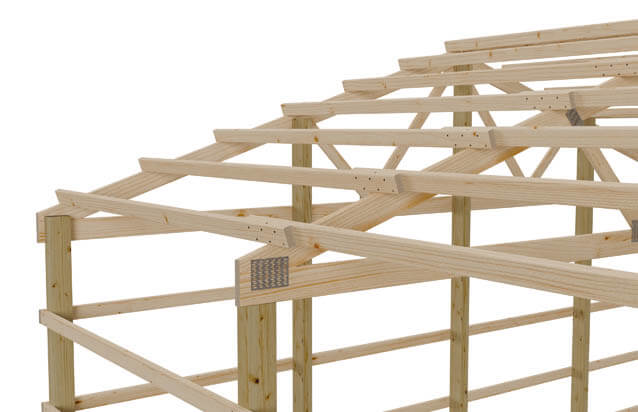
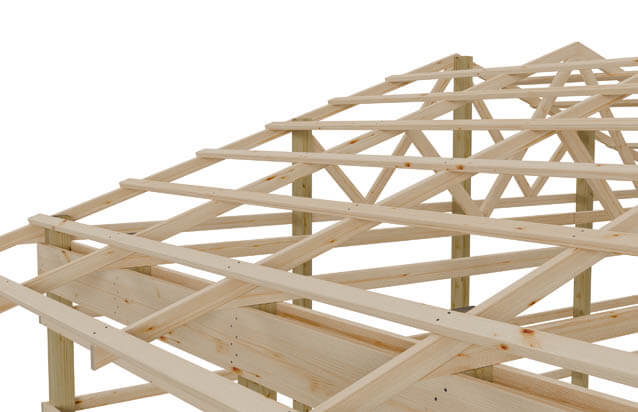
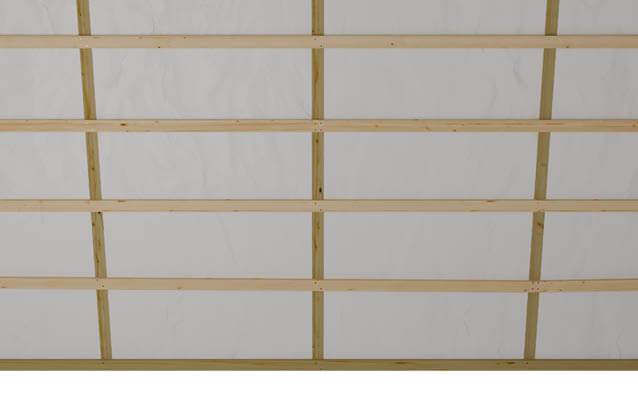
These are the lateral framing members of the roof system. Purlins are designed to provide a nailing surface to attach your roof steel. The purlins are designed to carry roof loads between the trusses and transfer that weight to the trusses.

2x4 on Edge

2x6 Dropped

2x4 Flat on 4' OC

OSB on 2' OC

On Edge purlins are typically installed on post frame buildings having trusses spaced 5' OC or greater. Purlins are spanned to typically connect three trusses, and are secured to the trusses using 60D ringshank nails.

Dropped purlins are most often times used on buildings that have a wide truss spacing such as 10' OC. These purlins are secured to the trusses using metal hangers and the top of the purlins will sit flush with the top of the top chord on the trusses.

Flat purlins are used for truss spacing of 4' or less. At these truss spacings, the flat purlin is able to span the distance and still provide adequate strength for the roof system. Flat purlins provide a wider nailing surface to secure your roof steel.

Solid roof sheathing is common on 2' OC trusses. The roof sheathing allows the roof steel to be attached to the roof and have continuous support under the steel.

Post Frame Insulation
Post Frame Bookshelf Insulation
Post Frame Flat Girt Insulation

Insulation

Post Frame buildings can be insulated and are quite energy efficient. There are several ways in which post frame buildings are insulated depending on the type of wall framing that the building has.

Bookshelf Insulation

Flat Girt Insulation

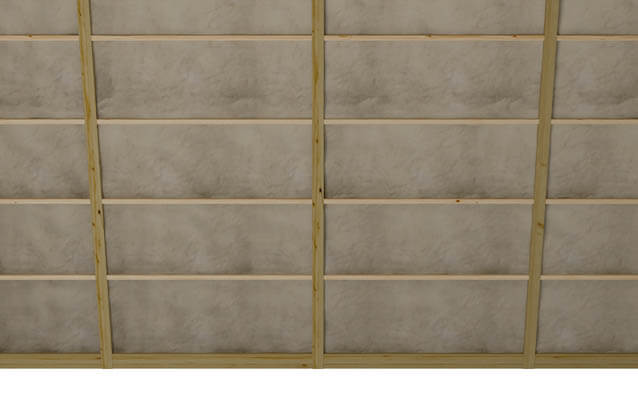
Bookshelf buildings typically will have R-19 rolls of insulation that are installed horizontally between the girts. This insulation is available in both faced and unfaced options. If unfaced insulation is installed, an additional vapor barrier should be installed before any interior liner is installed on the walls.

Flat girt buildings will utilize wider rolls of post frame insulation that are installed vertically in the wall cavity. The rolls are installed with the fiberglass insulation facing the exterior face of the building and the white liner facing towards the interior of the building. This white liner on the insulation will be the vapor barrier and will not require any additional vapor barrier to be installed prior to adding any interior wall liners.

Post Frame Post
Post Frame Bookshelf
Post Frame Double

Window and Door Framing

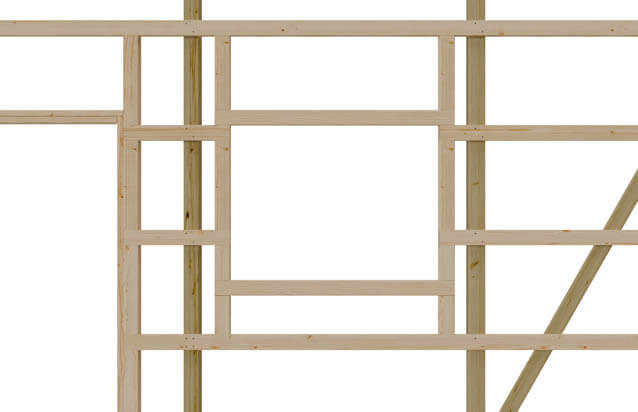
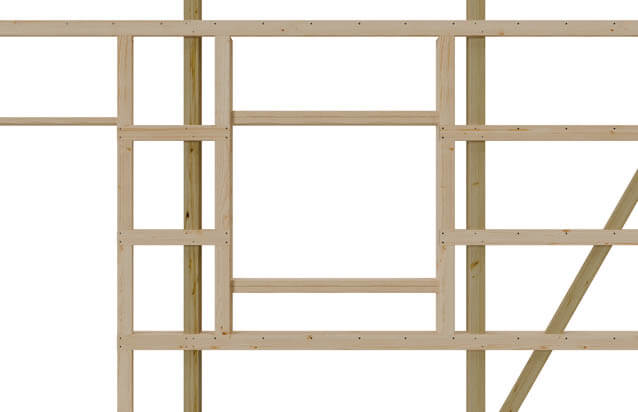
Framing windows and service doors in a post frame building is simple and flexible. Openings are created after the main structure is framed, which means you can place windows and doors almost anywhere without major changes to the building.

This flexibility means you can add natural light or extra access points exactly where you want them.

Bookshelf

Flat Girt

Openings are framed using 2x6s that tie into the bookshelf girts. The result is strong, clean openings ready for installation.

Openings are framed using 2x4s that create the rough opening for the window or door. This process is quick and straightforward.